
Komorbiditelerin COVID-19 Prognozuna Etkisi Sanılandan Daha Fazla: Bölgemizin Özeti
Cilt 36, Sayı 3
Aralık 2022 · Sayfalar 180-187
Komorbiditelerin COVID-19 Prognozuna Etkisi Sanılandan Daha Fazla: Bölgemizin Özeti
The Effect of Comorbidities on the Prognosis of COVID-19 is More Than Thought: A Summary of Our Region
Merve YILMAZ BOZOGLAN1, Gülden ESER KARLIDAG2
2University of Health Sciences, Fethi Sekin City Hospital, Infectious Diseases and Clinical Microbiology Clinic Elazığ, TÜRKİYE
Amaç: COVID-19 toplum bağışıklığı, bu günlerde aşılama yoluyla sağlanmaya çalışılmaktadır. Eşik değer aşılabilirse, COVID-19 da grip gibi yıllık salgınları olan mevsimsel enfeksiyonlardan biri olabilir. Mevcut çalışma, altta yatan en yaygın komorbiditelerin, COVID-19 hastalarında yoğun bakım ünitesi (YBÜ) ve mekanik ventilasyon (MV) gereksinimlerini ile mortaliteyi nasıl etkilediğini anlamayı amaçlamaktadır.
Gereç ve Yöntem: Ana demografik veriler, laboratuvar ve radyolojik bulgular, COVID-19 teşhisi konan 152 hastanın tıbbi kayıtlarından retrospektif olarak elde edildi. Reçete bilgi sisteminden hastaların komorbidite verileri çekildi. Tüm verilerin YBÜ ve MV gereksinimleri ve mortalite üzerindeki etkisi Student t-testi, Mann-Whitney-U veya Ki-kare testleri ile analiz edildi. Hastanede kalış süresi tek değişkenli analizlere göre değerlendirildi.
Bulgular: 152 hastanın 72'si erkekti. Ortanca yaş 56.5 idi. Ortalama hastanede kalış süresi 7 gündü. Vaka ölüm oranı %5.9 olarak hesaplandı. İleri yaş, yatış sırasındaki klinik semptomlar ve laboratuvar değerleri YBÜ, MV ve mortalite riskini anlamlı olarak artırdı (p<0.05). Hastaların yaklaşık yarısında en az bir veya daha fazla komorbidite mevcuttu. En sık görülen komorbiditeler sırasıyla hipertansiyon, diyabet ve kardiyovasküler hastalıklarolarak sağtandı. Özellikle diyabet, kötü prognoz ile anlamlı olarak ilişkiliydi (p<0.05).
Sonuç: Herhangi bir komorbiditenin varlığının prognozu olumsuz etkilediği görülen COVID-19 hastalarının, bu hastalıklarının farkında olup, onları iyileştirmeye ve kişisel sağlık durumlarını yüksek tutmaya çalışmaları, COVID-19'da kötü prognozunu engellemede daha başarılı bir tedavi yönetimi olabilir.
Objective: Nowadays community immunity is trying to be achieved through vaccination. If the threshold value can be exceeded, COVID-19 may also be one of the seasonal infections with annual epidemics like influenza. The current study intends to understand how the most common underlying comorbidities affect the intensive care unit (ICU) and mechanical ventilation (MV) requirements and mortality of COVID-19.
Materials and Methods: Main demographic data, laboratory, and radiological findings were obtained retrospectively from medical records of 152 patients diagnosed with COVID-19. Comorbidities were ensured from the prescription information system. Effect of all data on ICU and MV requirements and mortality were analyzed with Student's t-test, Mann-Whitney-U, or Chi-square tests. Length of hospital stay was evaluated according to univariate analyzes.
Results: Out of 152 patients, 72 were men. The median age was 56.5 years. The median length of hospital stay was 7 days. The case fatality rate was 5.9%. Elderly ages, clinical symptoms during admission, and laboratory values increased the risk of ICU, MV and mortality significantly (p<0.05). At least one or more comorbidities were present in nearly half of the patients. The most prevalent comorbidities were hypertension, diabetes, and cardiovascular diseases, respectively. Especially diabetes was significantly associated with poor prognosis (p<0.05).
Conclusion: COVID-19 patients with any comorbidity yielded poorer clinical outcomes. Awareness of comorbidities, trying to cure them, and striving for maintaining a high personal health status seems to prevent the bad prognosis of the COVID-19.
Giriş
It has been almost two years since the World Health Organization declared coronavirus disease 2019 (COVID-19) infection caused by the Severe Acute Respiratory Syndrome Coronavirus-2 (SARS-CoV-2) as a pandemic [1]. Despite the passing time and the availability of effective vaccines in COVID-19, excess number of newly or re-infected patients with COVID-19 and the severity of the disease reveal the need for a thorough understanding of clinical situation, as well as information such as personal medical history and comorbidities. Reports from many countries have been presented on the factors affecting the prognosis and outcome of the COVID-19. Besides describing full spectrum of illness, it was mentioned that middle-aged or older patients with pre-existing comorbidies had higher risk of severe COVID-19 [2]. The most common comorbidities reported are hypertension, cardiovascular diseases (CVD), and diabetes [3]. A meta–analysis clearly indicated mortality is significantly higher in diabetics [4]. It was stated that many comorbidities such as CVD, hypertension, diabetes, and asthma except cerebrovascular diseases increase mortality, in another study [5].Here in the east of Turkiye, as in all of the world, healthcare professionals continue to work with maximum effort. Although the strength of the health care system at a sufficient level, the infection still continues to take lives. In this situation, every piece of information published about COVID-19 have guided the scientists and health workers in the management of the pandemic. Current informations are still supporting that the disease progresses at a critical level especially in the elderly and those with a chronic disease.
This paper focused rigorously on the clinically significant comorbidities common in our region in COVID-19 patients. In this way, impact of these comorbidities on admission to the intensive care unit (ICU), mechanical ventilation (MV) necessities, mortality and length of stay in the hospital which have not probably described in a single study were observed. Thus, it was evaluated how comorbidities might affect the prognosis and how serious the outcome might be.
Gereç ve Yöntem
Research and Publication Ethics: The study was approved by Ministry of Health (Approval No: T11-29-58) and local ethics non-interventional research ethics committee of Fırat University (2020/08/06).Main demographic characteristics, presenting symptoms and data of laboratory and radiographic findings at the time of admission were collected retrospectively by reviewing electronic health records of hospital system. Information about comorbidities were obtained from the registered prescription information system of the Turkish Ministry of Health. An informed consent was not obtained due to the retrospective design. The study was managed according to the national guidelines [5].
176 adults between 18 to 97 years who were admitted to City Hospital of Elazig between July and November 2020 with the COVID-19 infection symptoms, were enrolled firstly. Inpatients without available key information in their medical records and patients transferred to another center were excluded. A total of 152 patients who were diagnosed as COVID-19 by reverse transcriptase polymerase chain reaction (RT-PCR) testing of a nasopharyngeal swab and/or who presented with similar clinical symptoms and radiographic findings compatible with COVID-19 were included in the final analysis [6]. Bilateral, peripherally and generally dispersedly distributed, ground-glass opacities in the lung parenchyma, are the most common findings on chest computed tomography (CT) [7]. Symptomatic patients with this CT image were evaluated in favor of pulmonary involvement of atypical viral pneumonia and considered COVID positive even if they were PCR negative.
Symptoms during admission classified according to the doctors’ evaluation and guideline of WHO [8]: asymptomatic; PCR- positive cases with no symptoms, mild to moderate; fever, cough, myalgia or other symptoms with no sign of pneumonia, and severe cases with the symptoms of pneumonia or more (shortness of breath, dyspnea, extreme fatigue and hypoxia etc.)
Although there is a long list of laboratory findings, the most common characteristicly increased or decreased laboratory markers (D-dimer, CRP, LDH and lymphocyte count) were chosen. At the same time, parameters that are important to evaluate the COVID-19 prognosis, such as IL-6, ferritin and procalcitonin, were not included because they were not requested from every patient.
Level of hospital care was categorized as only medication in the ward, ICU or MV. Length of hospital stay and the process resulting in discharge from hospital or with death, were analyzed.
Statistical Analysis: IBM SPSS v22 software was used for data analysis. The normality of distribution for continuous variables was confirmed with the Kolmogorov-Smirnov test. Complementary statistics of quantitative variables were presented as mean±sd for those which fit the normal distribution assumption and as median for those which did not. Categorical data were presented as numbers and percentages. For comparison of continuous variables between two groups, Student's t-test or Mann-Whitney U test was used depending on whether the statistical assumptions were fulfilled or not. Chi-square test was applied to investigate categorical variables between groups. Length of hospitalisation day was evaluated according to the variables that were considered to be statistically significant in univariate analyzes. p<0.05 was considered significant.
Bulgular
Out of 152 COVID-19 diagnosed patients, 72 (47.4%) were men and 80 (52.6%) were women. The median age was 56.5 years (ranging from 21 to 97 years). 9 patients have died. A hundred thirty and eight (90.8%) patients were PCR positive and 106 (69.7%) patients had CT findings consistent with COVID-19.
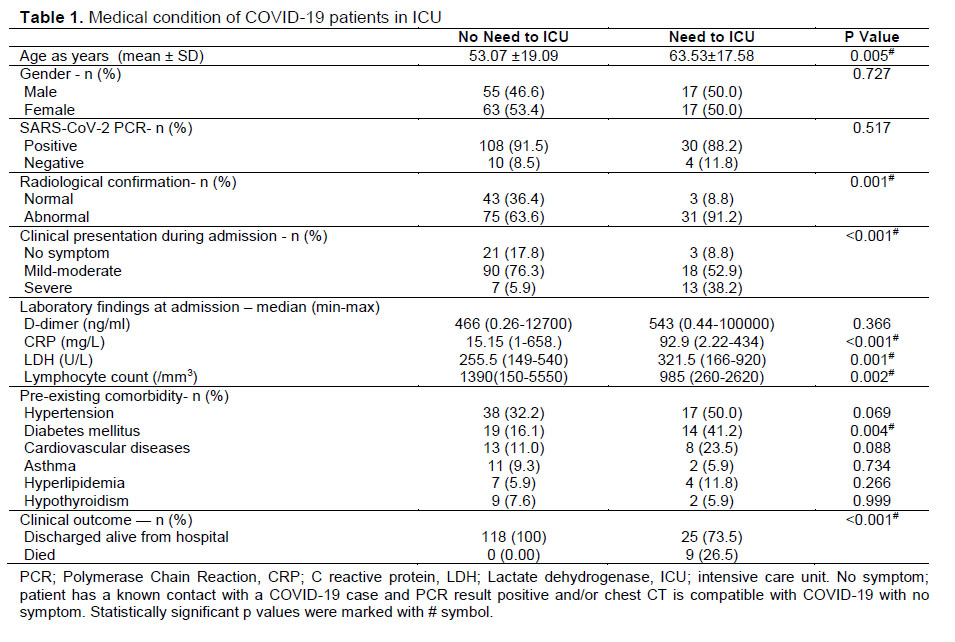
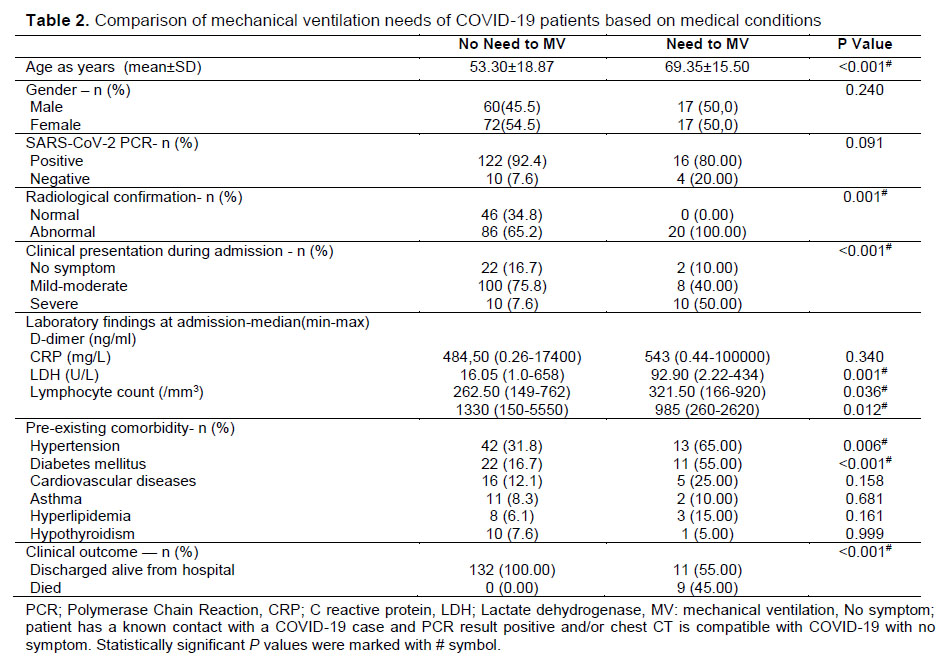
While 24 (15.8%) patients were asymptomatic, 108 (71.1%) patients had mild-moderate symptoms. The remaining 20 (13,2%) patients were admitted to the hospital with severe symptoms. The severity of the disease was the parameter that most significantly affected the process leading to ICU, MV and mortality (p<0.001 and p=0.001) (Table 1,
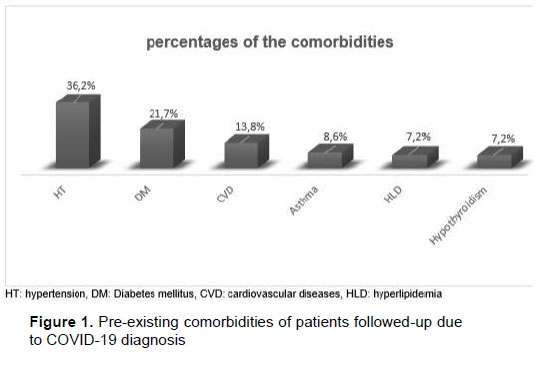
At least one or more comorbidities were present in nearly half of patients (42.73%). Hypertension (36.18%) was the most common comorbidity and it was followed by diabetes (21.71%) and CVD (13.81%) (Figure ffigure1>1). The intensive care and MV needs of the patients were 22.4% and 13.2%, respectively. Diabetes increased the need for intensive care significantly (p=0.004) (Table 1). Hypertension and especially diabetes increased the need for MV, significantly (p=0.006 and p<0.001) (Table
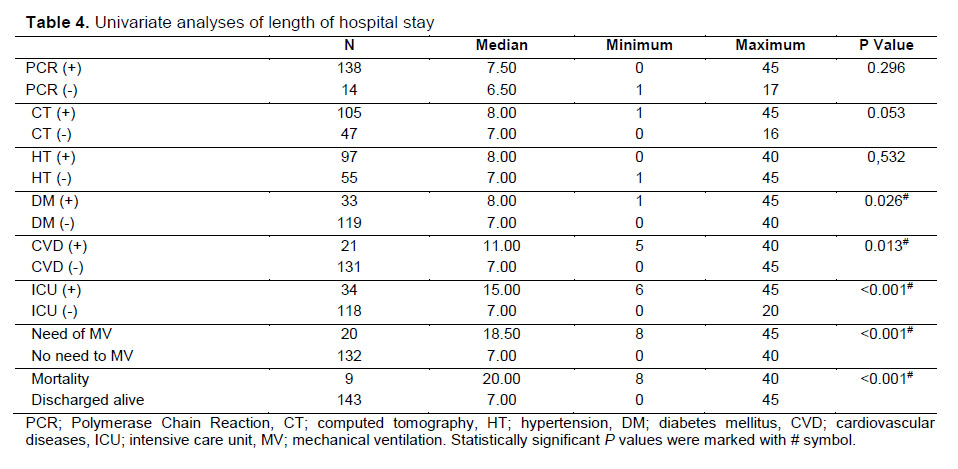
The median length of hospital stay was 7 days ranged from less than 24 hours to 45 days. It was 15 days in ICU and 18.5 days for MV and 20 days for exitus patients. Only patients with DM (8 days and CVD (11 days) had risk of prolonged hospital stay, significantly. It was also remarkable that patients with CVD stayed in the hospital for a minimum of 5 days. CT findings indicating COVID-19, increased the duration of hospitalization with a borderline significance (Table 4).
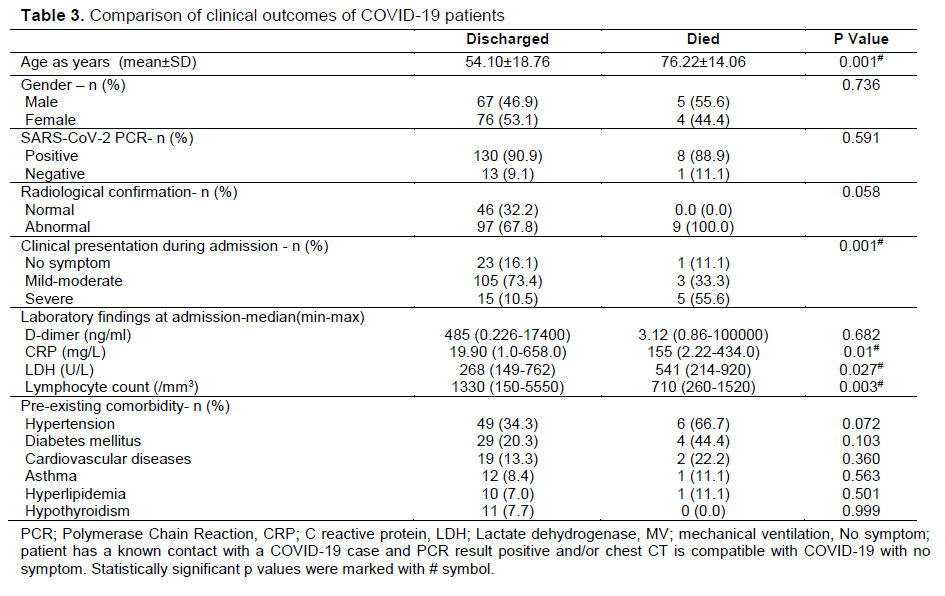
143 patients were discharged and 9 patients died during hospitalisation. The case fatality rate was 5.9 %. Older age (p=0.001), severity of clinical presentation (p=0.001) and laboratory values other than D-dimer (p<0.05), which also significantly increased ICU and MV requirements, were significantly associated with higher mortality (Table 1, 2 and 3). CT findings pointing to COVID-19 were created borderline significance on mortality. Although it negatively affected the prognosis of the infection, any pre-existing comorbidity did not significantly change the mortality (Table 3).
The medications which were chosen according to the the patient's clinic, treatment guidelines of the Ministry of Health at the relevant date and the physician's decision were also recorded in detail. Patients who were treated with HCQ and/or favipiravir alone did not need respiratory support or their condition did not deteriorate. The vast majority of patients in intensive care (91%), all mechanically ventilated and the deceased patients were administered many medications with unproven survival benefits. Due to the fact that giving more medication would help improve the patients medical condition nonetheless, it would be statistically biased to evaluate the effect of the treatments received by the patients on the process and clinical outcome (Data not shown).
In this study, considering that the clinical symptoms, laboratory values and CT images at the time of admission show the severity of the disease, and demographic data such as age and gender cannot be changed, it has been determined how important the current pre-existing comorbidities of the patients are in the prognosis of the disease. It has observed that diabetes increased both ICU and MV risks. Interestingly hypertension was found to be a risk for only MV. When all the data in this study were evaluated, prognosis and outcomes of the COVID-19 were attributed mostly to the elder age, comorbidities and laboratory findings in this study.
In early meta-analyses in 2020, it was revealed that male gender has a higher risk of COVID-19 infection. When compared to women, it was also reported that men had COVID-19 severely and need ICU more. It has even been shown that men have higher mortality rates [3,9]. Later on, it was seen that the rate of male and female patients approached each other [10]. As in the analyzes of Price-Haywood et al. [11]), the number of women who infected with SARS-CoV-2 was found to be higher than the number of men. And the progression of the infection was found to be more serious in males [12]. In this study, it was analyzed that although the number of men was less than women, the need for MV was higher in men.
Even though all age groups have been affected by COVID-19, the median age appears to be around 47–59 years, as consistent with this study [13]. Many studies have shown that advanced age increase the risk and severity of the infection [14]. Lai CC et al. [15] suggest that ICU and MV necessities were higher in the elderly.
Majority of COVID-19 patients admitted to the hospital mostly with mild-moderate symptoms in this study. As stated in many papers [16], it was observed that severe symptoms during admission worsened the clinical outcomes of the patients. There were numerical differences between countries about level of hospital cares based on geographical area, clinical practise, health care systems, predisposing factors such as age and comorbidity [17]. They were demonstrated that ICU and MV needs and fatality rates were higher in patients with severe complaints in this study. However, the remarkable point was that of the 24 patients who were admitted to the hospital without any symptoms, 3 needed intensive care and 1 of them died. At the beginning of the pandemic, it was thought that SARS-CoV-2 was a virus which had its effect only on the respiratory system and the symptoms were related to this system. It was later discovered that it affects many other systems almost all the whole organism. It may be possible to assume that these patients without respiratory symptoms had important implications for COVID-19 that were overlooked. Another reason for the cases that may have been overlooked at the beginning of the pandemic was that patients with symptoms were evaluated according to PCR results only. Later if needed, chest CT was also used. Thus, the diagnostic protocol consisted of PCR and chest CT scans. Although it is thought that CT can be used for early diagnosis of viral disease, viral nucleic acid detection with PCR remained the standard of reference [18]. On the contrary there were also cases with negative PCR results 3 times and the CT scans were confirming viral pneumonia and symptoms. Considering that the negative predictive value (NPV) is the probability that subjects with a negative screening test truly don't have the disease, repeated PCR results inconsistent with the clinic of the patient can be attributed to the low NPV of the PCR. According to the current study, none of the patients who did not have CT involvement at the time of admission, required MV. This shows that the NPV of CT was higher than PCR in this study, which is consistent with previous papers [19]. Moreover, havig abnormal CT findings due to COVID-19 was found related with ICU or MV requirement, significantly. Based on the evidence to date, it was learned that ground glass opacities on CT affected the severity of the disease [20]. CT images demonstrated the severity of COVID-19 effectively but did not show a relation on survival in this study.
In addition to diagnostic methods laboratory findings were also guiding in diagnosis and prognosis. As noted in a systematic review that coincides with the current study in time, ICU admissions and deaths were predicted by increased LDH and some other parameters [21]. A meta-analysis evaluating 20 publications suggested that the absolute lymphocyte count affects the clinical outcome of the patient with COVID-19 [22]. Decreased lymphocyte count was also found as another risk factor for death in COVID-19 patients [16]. CRP mentioned as another frequently and significantly increased laboratory parameter in COVID-19 [23]. Significantly increased LDH and CRP levels, and decreased lymphocyte counts which were associated with the severity of the infection, were measured in this study. Another laboratory value was measured (D-dimer) extremely high (100000 ng/mL). Although D-dimer was presented as an independent predictor for both mortality and complications of COVID-19 in the literature, it was not supported in this study [24]. The extremely high value may be due to a racial situation [25]. Since the higher levels of D-dimer is associated with the thromboembolic events, the cause of by the Syrian patient may be related to the D-dimer. In order to be meaningful for these assumptions, the sample size may have been limited.
It has known that comorbidities are also potentially important aspects which could affect the severity and prognosis of COVID-19 [26]. Hypertension has been observed to be the most common comorbidity accompanying COVID infection worldwide since the beginning of the pandemic. And the following comorbidities were diabetes and CVD [14]. There are other studies in which the comorbidities were same but the rates were different [27]. It can be said that this is due to the fact that these diseases, which have a pathophysiological basis of inflammation, are the most commonly reported chronic diseases both in our region and in the world. This study supported that hypertension, diabetes and CVDs were the most common pre-existing comorbidities, respectively. However patients requiring ICU or MV were significantly likely to have underlying diabetes while hypertension had a narrower but critical effect on only requirement to MV. Based on previous studies, diabetes was significantly more common in severe cases [28]. This may be due to the association of diabetes with a low-grade chronic inflammatory state that favors the development of an exaggerated inflammatory response. It can be said that hypertension and CVDs, especially diabetes, negatively affect the prognosis of the infection and increase the risk of severity. With this they were not independent factors associated with mortality. For instance, Wang et al. declared that the risk for ICU admissions in COVID-19 patients with diabetic comorbidity is 14.2% higher than individuals without diabetes [13]. This ratio was significantly higher in the current study. USA, China and Italy were also reported similar data to this study [14,28,29]. Bienvenu et al. [30] stated that CVDs associated with COVID-19 increased fatality rates and prolonged hospital stay. This may be due to the extra cardiac load caused by COVID-19. Asthma is known to predispose to viral infections. However, at the same time, the delay of the natural immune response in people with asthma may have prevented serious cytokine storms in the COVID-19 [31]. According to a Mexican population study, asthma may also protective illnes for hospitalization, MV need and death in COVID-19 [19]. The reason for the insignificant results about asthma may be the protective effect or the low number of asthmatic patients in the current population.
The COVID-19-related death rates differ between countries and is affected by various risk factors. Case fatality rates were 1.7% for the United States, 2.6% for the United Kingdom, and 2.23% for the entire world. According to mortality analyses published by John Hopkins University of Medicine, Coronavirus resource center Mexico had the highest case-fatality rate in the world (8.6%). At that time, Italy, India and South African were also the countries that followed with the highest rates [32].
So far it was learned that the course of COVID-19 infection is linked to the patient’s immune response to the virus and the personal health status (especially comorbidities) during the first admission to the hospital, apart from the viral load [33]. And this answer reflects the severity of the prognosis and the outcome. Viral load and the immune system of the patient are hardly intrusive factors. Thus, it seems reasonable to focus on modifiable risk factors of comorbidities with proven effects on serious outcomes of COVID-19 as well.
This study revealed that elder age and comorbidities, especially diabetes, are responsible for the poor prognosis in COVID-19. Age cannot be changed. However, any action taken to ameliorate the modifiable factors of the most common comorbidities worldwide could improve the prognosis of COVID-19 in infected patients, until the critical threshold at which the community immunity is attained is reached.
Disclosure: The authors have no potential conflicts of interest to disclose.
Funding: The authors received no financial support for the research, authorship, and/or publication of this article.
Acknowledgments: The authors thank M. Onur KAYA for his assistance with the statistical analysis.
Tartışma
Nowadays community immunity is trying to be achieved through vaccination. In the city where this study was conducted, the rates are not yet at the desired levels due to those who refuse the vaccine. The rate of COVID-19 patients who refuse the vaccine is higher in severe disease progress and serious outcomes.References
- The Euroscore Evaluation of 200 Cases in a New Cardiac Surgery Centre
- YENİ BİR KALP CERRAHİSİ MERKEZİNDEKİ 200 OLGUNUN EUROSCORE SİSTEMİYLE DEĞERLENDİRİLMESİ
- İnsüline Bağımlı Diyabetes Mellitusun Epidemiyolojik Özellikleri
- Antep Fıstığı Tüketimi Diyabetik Sıçan Modeli Üzerinde Faydalıdır
- C Vitamini Verilen Diabetik Sıçanların Lens ve Deri Protein Glikasyonu, Lipid Peroksidasyonu ve Glutatyon Düzeyleri