
Türk Toplumunda Obezite ve Fazla Kilo Prevalansı ve İlişkili Faktörler
Volume 37, Issue 1
March 2023 · Pages 001-009
Türk Toplumunda Obezite ve Fazla Kilo Prevalansı ve İlişkili Faktörler
Obesity and Overweight Prevalence and Related Factors in Turkish Community
Edibe PİRİNÇCİ1, Yasemin AÇIK1, Burkay YAKAR2, Semiha EREN3, Halil İbrahim AKKUS3, Tufan NAYIR4, f Toker ERGÜDER4, Ferit KAYA5, İrem BULUT1, Ufuk ACAR6, Süleyman Erhan DEVECİ1
2Fırat University, Faculty of Medicine, Department of Family Medicine, Elazığ, TÜRKİYE
3Elazığ Provincial Health Directorate, Elazığ, TÜRKİYE
4World Health Organization, Turkey Office, Ankara, TÜRKİYE
5Adıyaman University, Faculty of Medicine, Department of Public Health, Adıyaman, TÜRKİYE
6Suruç Provincial Health Directorate, Şanlıurfa, TÜRKİYE
Amaç: Obezite ve aşırı kilo prevalansı tüm dünyada giderek artmaktadır. Türkiye'de obezitenin etkin bir şekilde önlenmesi ve yönetimi için obezite ve ilişkili faktörler arasındaki ilişkilerin daha iyi anlaşılması gerekmektedir. Bu çalışmanın amacı obezite prevalansını ve obezite ile ilişkili faktörleri belirlemek ve obeziteyi önleme stratejilerine katkıda bulunmaktır.
Materyal ve method: Toplum temelli, kesitsel çalışma Türkiye'nin doğusunda gerçekleştirilmiştir. Örneklem büyüklüğü, toplam 128.706 haneden %95 güven aralığında %3 sapma ile 1058 hane olarak hesaplanmıştır. Katılımcıların sosyodemografik özellikleri, obezite için risk faktörleri ve antropometrik ölçümleri anket formu ile elde edildi. Risk faktörlerini belirlemek için “WHO STEPwise yaklaşımı sürveyans anketi temel alınmıştır. Bireylerin vücut kitle indeksi fazla kilo ve obezite tanısında, bel çevresi ise santral obezite tanısında kullanıldı.
Bulgular: Çalışmaya dahil edilen 18 yaş üstü 1679 katılımcının %55,9'u (n=938) kadın ve %44,1'i (n=741) erkekti. Fazla kilolu olma ve obezite prevalansı sırasıyla %34.0 ve %31.7 idi. Obezite prevalansı kadınlarda (%40.9) ve aşırı kilo prevalansı (%34.0) erkeklerde daha yüksekti. Santral obezite prevalansı %15.1 idi. (kadınlarda %13,5 ve erkeklerde %17.0). Bel-kalça oranına göre katılımcıların %44,1'i kardiyovasküler hastalıklar açısından riskli bulundu. Evli olmak (OR, 1.95; %95 GA, 1.34-2.85), ev hanımı olmak (OR, 2.33; %95 GA, 1.49-3.64), sigara içmiyor (OR, 1.40; %95 GA, 1.05-1.87), düşük eğitim düzeyi (özellikle okuma yazma bilmeyen) (OR, 2.30; %95 GA, 1.27-4.14), yaş, özellikle 45-54 yaş aralığı (OR, 10.27; %95 GA, 5.91-17.83) ve hipertansiyon (OR, 1.25; %95 GA, 0.25-0.40) obezite için bağımsız risk faktörleriydi.
Sonuç: Çalışmamıza katılanların yaklaşık üçte biri obez ve üçte biri fazla kiloluydu. Obezite oranı kadınlarda, aşırı kilo oranı erkeklerde daha yüksekti. Fazla kilo ve obezite prevalansı, çalışma popülasyonunda ciddi bir problem olarak görünmektedir. Mevcut çalışma verilerine dayanarak, halk sağlığını iyileştirmek için aşırı kilo ve obezite prevalansını azaltmak için derhal önlem alınmasını öneriyoruz.
Objective: The prevalence of obesity and overweight are increasing in all over the world. Better understanding of the relationships between obesity and related factors is necessary for effective prevention and management of obesity in Turkey. The current study was aimed to determine the obesity prevalence and factors related to obesity and to contribute to obesity prevention strategies.
Methods: Population-based, cross-sectional study was conducted in eastern part of Turkey. The sample size was calculated as 1058 households with a deviation of 3% at 95% confidence interval from a total of 128,706 households. Sociodemographic characteristics, risk factors for obesity and antropometric measurements of the participants were obtained with the questionnaire form. The questionnaire “The WHO STEPwise approach to surveillance (STEPS)” was taken as a basis to determine risk factors. Body mass index of individuals was used in the diagnosis of overweight and obesity, and waist circumference was used in the diagnosis of central obesity.
Results: Total of 1679 participants over aged 18 years, 55.9% (n=938) were female and 44.1% (n=741) were male. The prevalence of overweight and obesity were 34.0%, and 31.7% respectively. The prevalence of obesity was higher in women (40.9%) and the prevalence of overweight (34.0%) was higher in men. Central obesity prevalence was 15.1%. (13.5% in women and 17.0% in men). According to waist-to-hip ratio, 44.1% of the participants were risky for cardiovasculer diseases. Being married (OR, 1.95; 95% CI, 1.34-2.85), being housewife (OR, 2.33; 95% CI,1.49-3.64), non-smokers (OR, 1.40; 95% CI, 1.05-1.87), low education level (especially illiteracy) (OR, 2.30; 95% CI, 1.27-4.14), age, especially 45-54 age range (OR, 10.27; 95% CI, 5.91-17.83), and having hypertension (OR, 1.25; 95% CI, 0.25-0.40) were independent risk factors for obesity.
Conclusion: Approximately one third of the study populaton were obese and one third were overweight. Obesity rate was higher in women and overweight rate was higher in men. The prevalence of overweight and obesity appears to be an severe problem in study population. Based on current study data, we recommend taking preventions to reduce the prevalence of overweight and obesity immediately to improve public health.
Introduction
Obesity is defined as abnormal or excessive fat accumulation in the body at a level that negatively affects the health of individuals. Today, it is an important cause of morbidity and mortality and also an important public health problem due to its high prevalence [1]. The World Health Organization (WHO) reported that the prevalence of obesity has tripled since 1975, and in 2016, approximately 1.9 billion adults were overweight and more than 650 million individuals were obese worldwide [2]. The prevalence of obesity in Turkey was 22.3% in 1998, while this rate increased to 29.5% in 2016 [2,3]. Considering the 2016 report of WHO, Turkey have most prevalent obesity prevalence with 29.5% obesity prevalence among European countries [1-3].Obesity is associated with increased risk of hypertension, dyslipidemia, type 2 diabetes mellitus, heart diseases, stroke, osteoarthritis and some cancers, and high obesity prevalence is an important public health problem [4,5]. In addition to increasing the risk of chronic disease, obesity has been directly associated with morbidity and mortality. It was reported that the risk of death increases by 20-40% rate in overweight individuals and every 5 kg / m2 increase in body mass index increases mortality by 30% rate general population [6,7].
The most important reason in the development of obesity is the intake of extra calories as a result of the disturbed balance between energy intake or energy expenditure. Obesity, which previously posed a threat to developed countries, has now become a problem for all countries due to the increase in high calorie fast food and sedentary life [8]. A previous study has been reported that obesity prevalance is rapidly increase in recent years by changes in the nutrition and physical activity patterns of individuals with the economic growth of China [9]. Age, gender, education level, socio-cultural factors, income, hormonal and metabolic factors, genetic factors, psychological problems, frequent very low calorie diets, smoking and alcohol use, some drugs (antidepressants etc.), multigravida and low time between pregnancy periods are other risk factors associated with obesity in addition to malnutrition and sedentary life [10].
Obesity, which is a global problem affecting all age groups, genders and ethnicities, is a disease that can be prevented by changing the lifestyle. For optimal health, the BMI is recommended to be between 18.50 and 24.99. Today, although BMI is widely used as a clinical or epidemiological tool for evaluating cardiovascular risk in both primary and secondary prevention, some studies have reported that BMI is not a good predictor of mortality risk [11,12]. Some studies are reported that obesity and comorbidities are closely related to abdominal obesity rather than total body fat amount [13,14]. Abdominal obesity is defined as the waist circumference of 102 cm in men and 88 cm in women. The prevalence of obesity in individuals over the age of 20 years reported, 29.9% in women and 12.9% in men according to TURDEP study conducted in Turkey. In the same study, when evaluating in terms of central obesity, the obesity prevalence was found to be 48.4% in women and 16.9% in men [2]. The high frequency of central obesity has revealed that central obesity is an important parameter in the follow-up and treatment [2].
The current study was aimed to determine the obesity prevalence and factors related to obesity according to BMI in the adult population and to contribute to obesity prevention strategies. In addition, cardiovascular disease risk assessment has been shown according to the central obesity, waist circumference and waist-hip ratio of the individuals.
Material and Method
Research and Publication Ethics: The current population-based, cross-sectional and descriptive study was conducted in Elazig Province of Turkey in 2015. All individuals aged 18 years and over living in Elazig province constituted the universe of the study. The sample size was calculated using the "n=Nt2pq/d2 (N-1)+t2pq" formula with 95% confidence interval and 3% deviation. There were 128,706 households in Elazig city during study time. Taking the expected prevalance of obesity as %30, a sample size of 1058 households is needed to survey a population [2,3]. These households were reached through a systematic sampling method from the list created on the computer using the address-based population registration system. The study was carried out in cooperation with Elazig Provincial Health Directorate, Fırat University Faculty of Medicine Department of Public Health and supported by WHO Turkish Office. The study was approved by Fırat University non-interventional research ethics committee (Date: 20.05.2014 no:10-02). Written consent was obtained from all participants in the study.Data Collection: Study data were obtained by questionnaire form prepared for obesity prevalance and to determine factors related to obesity. The questionnaire form consists of 3 parts. The first part of the questionnaire was included the personal and demographic characteristics of the participants, the second part was included questions Noncommunicable Diseases risk factors and in the third part was included anthropometric measurements. The questionnaire form was created on the basis of the "The WHO STEPwise approach to surveillance (STEPS)" question paper recommended by the World Health Organization to identify non-communicable diseases and risk factors [15]. Questionnare forms were applied 20 participants before start the study. Questions that were not understood by the participants in the questionnaire form were revised. After it was concluded that the questionnaire form was understandable by the participants, the questionnaire forms were administered by the healthcare personnel who were previously trained in the Elazig provincial health directorate, using face-to-face interview. Height, weight, waist and hip circumference measurements of the individuals were made in accordance with the measurement standards determined by the same personnel.
Measurements: The Participants' weights were measured with light clothes, without shoes, and during fasting conditions with an electronic scale that can accurately measure up to 100 grams. Height measurements were made by a tape measure during deep inspiration and the distance between the soles of the feet and te top of the head with a precision of 0.5 cm. Waist circumference (the lovest rib point between the lower rib and iliac crest) and hip circumference (widest region in the gluteal area) were measured with a standing and non-stretch tape measure [16].
Definations: The prevalence of obesity was evaluated according to body mass index (BMI). Body mass index was calculated with the formula "BMI=Weight (kg)/Height (m2)". Participants classified as lean (BMI<18.50), normal weight (BMI between 18.50 and 24.99), overweight (BMI between 25.00 and 29.99), and obese (BMI ≥ 30.00 ). Obesity is classified as mild (1st degree [BMI between 30.00-34.99]), moderate (2nd degree [BMI between 35.00-39.99]), and morbid obesity (3rd degree, [BMI> 40.00]). Waist circumference over 88 cm in women and 102 cm in men has been associated with increased cardiovascular risk and is defined as central obesity. In our study, overweight and central obesity were defined as between 80.0-87.9 cm and over 88 cm in women, between 94.0-101.9 cm and over ≥102 cm in men, respectively, according to waist circumference. The fact that the waist-hip ratio obtained by dividing the waist circumference by the hip circumference is over 0.90 in men and 0.85 in women is also an indicator of central obesity and increased cardiovascular risk [17]. In our study, the risky group was defined as waist-hip ratio being above 0.90 in men and 0.85 in women [17]. Smoking and alcohol use were determined according to the own opinions of the individuals. Those who smoked at least one cigarette a day for six months or more were defined as smoking, and those who consumed alcohol at least once a week in the last year were defined as alcohol use. The daily portion of vegetables and fruits consumed by the individuals, the portion number of meals eaten outside the home, the type of fat consumed and the physical activity characteristics of the individuals were defined by taking into account the individuals' own opinions.
Statistical Analysis: Statistical analysis of the data was performed by IBM SPSS 22 statistics package program. Shapiro-Wilk test was used to determine whether the data showed normal distribution. Descriptive statistics of the data were expressed as frequency for categorical variables as percentage (n (%)). Statistical significance was accepted as p<0.05. Multivariate logistic regression analysis was applied to statistically significant variables (P<0.05). All participants were divided into 2 groups for logistic regression analysis. Underweight and normal weight constituted one group, and overweight and obese constituted the other group (obese and overweight: 1, underweight and normal weight: 0). Odds ratio (OR) and 95% confidence intervals (CI) were calculated for each categorical variable.
Results
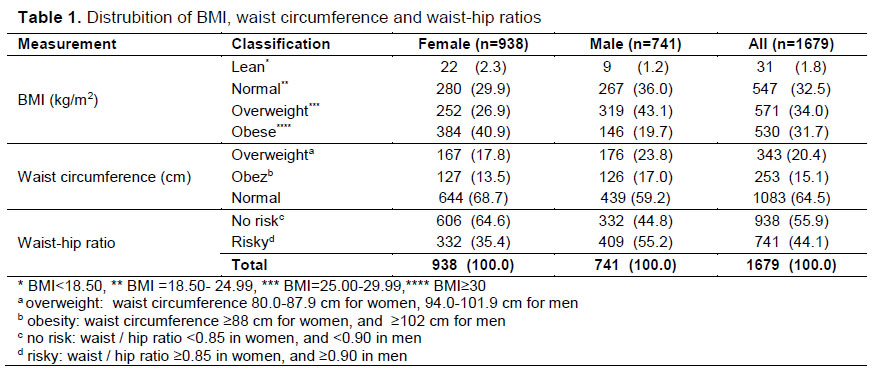
A total of 1679 participants aged 18 years and over included the study. The gender distribution of the participants was 55.9% (n=938) female and 44.1% (n=741) male. The prevalence of overweight and obesity were 34.0% and 31.7% respectively in study population. The prevalence overweight and obesity were 26.9% and 40.9% in women, and these rates were 43.1% and 19.7%, respectively, in men. Central obesity prevalence 15.1% (13.5% in women and 17.0% in men). Considering the waist-to-hip ratio, 44.1% of the participants were in the risky group (35.4% for women and 55.2% for men) (Table 1).
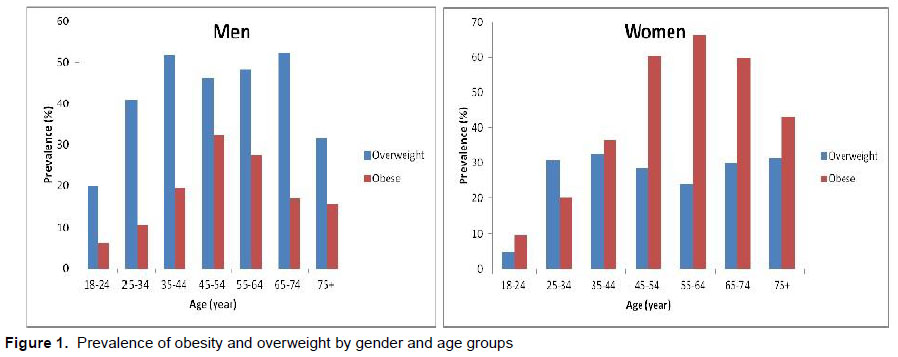
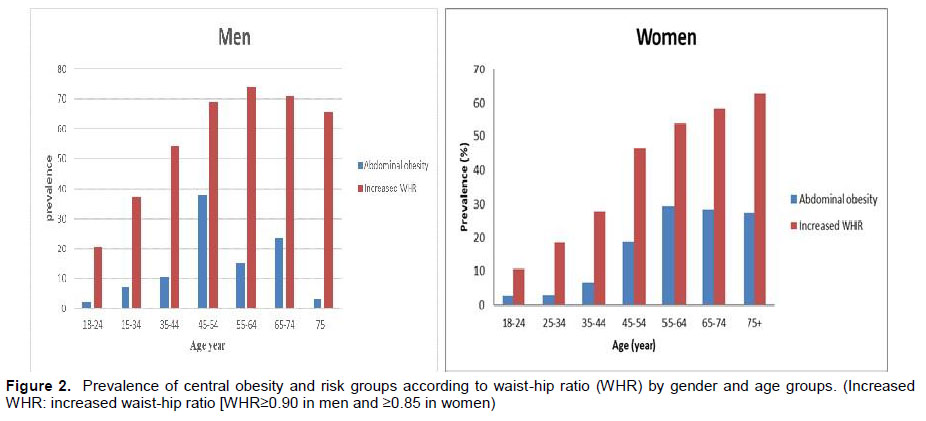
The prevalence of obesity and overweight increased with age in both genders. The highest obesity prevalence was detected in the 45-54 age group in men and 55-64 age group in women (Figure 1). The central obesity prevalence and risk groups according to waist-hip ratio are shown in figure 2. The risk of central obesity and waist-to-hip ratio (WHR) increased with age. The highest central obesity prevalence was detected in the 45-54 age group in men and 55-64 age group in women (Figure 2).
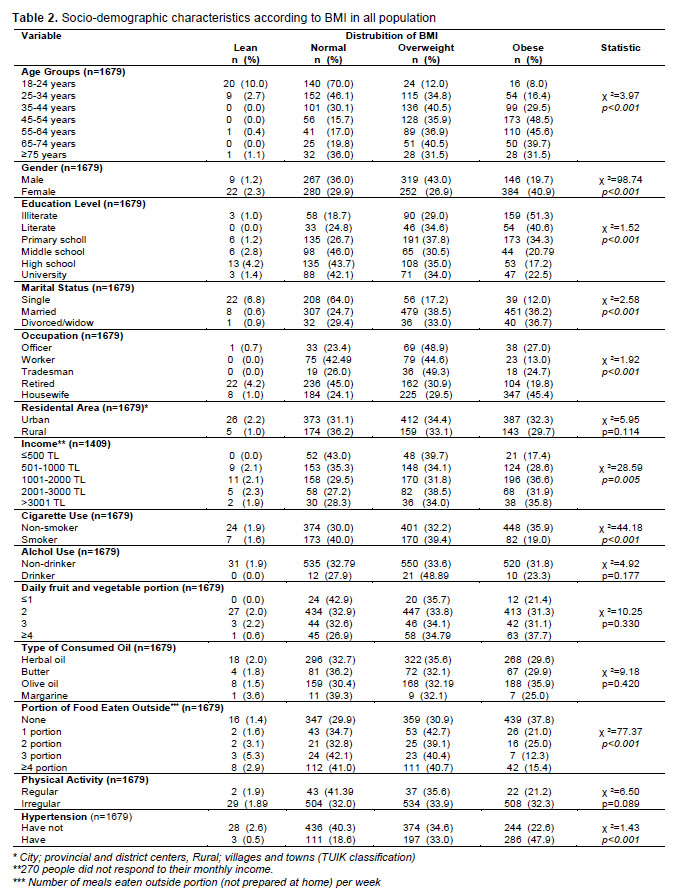
Obesity prevalence is higher in women than men (p<0.001). The highest obesity prevalence was seen in the 45-54 age range (p<0.001). The prevalence of obesity was found to be higher in housewives (p<0.001), those with low education level (p<0.001), high income level (p=0.005), non-smokers (p<0.001) and those with hypertension (p<0.001). Relationship between sociodemografic characterictics and obesity are shown in Table 2.
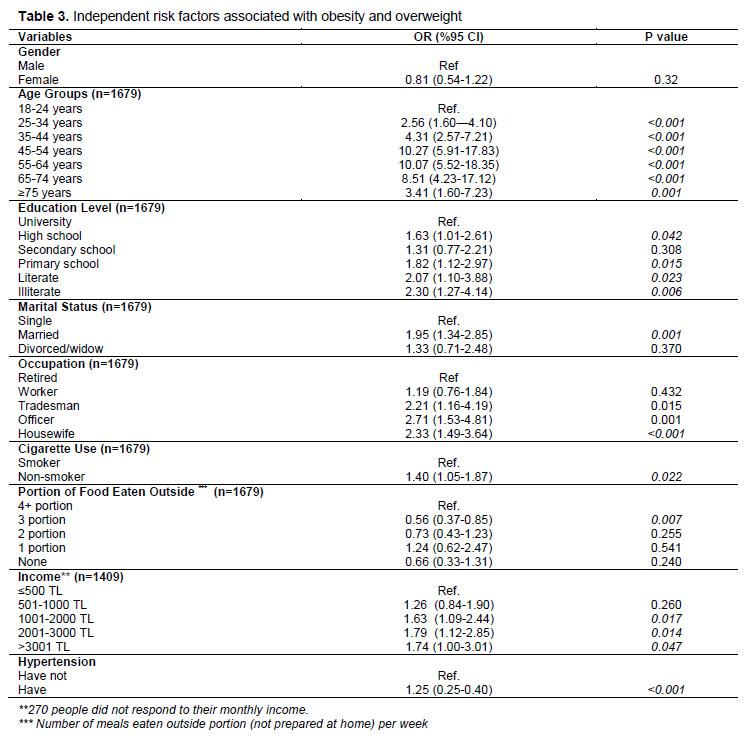
The results of the multiple logistic regression analyses showed in table 3. The regression analysis showed that being married (OR, 1.95; 95% CI, 1.34-2.85), being tradesman (OR, 2.21; 95% CI, 1.16-4.19), being officer (OR, 2.71; 95% CI, 1.53-4.81), being housewife (OR, 2.33; 95% CI, 1.49-3.64), having hypertension (OR, 1.25; 95% CI, 0.25-0.40) and being non-smoker factors (OR, 1.40; 95% CI, 1.05-1.87) were associated with overweight and obesity. Obesity and overweight risk are associated with higher age, especially the 45-54 age group was the most risky period for obesity and overweight (OR, 10.27; 95% CI, 5.91-17.83). The risk of obesity and overweight are associated with low education level, especially the illiterate group was the most risky for obesity and overweight (OR, 2.30; 95% CI, 1.27-4.14) (Table 3).
Discussion
The current study was showed that prevalence of overweight and obesity were 34.0% and 31.7% respectively, among adult Turkish population. It has been reported that the prevalence of overweight and obesity is between 15-60% worldwide and is an important public health problem [1]. The Studies were reported that 1/3 of the population in the United States of America is overweight and 1/3 is obese [18]. In recent studies, the prevalence of overweight and obesity has been reported as 36.5% and 26.5% in China, 64.6% and 30.3% in Russia, 36.2% and 41.7% in Kuwait and 30.1% and 35.6% in Saudi Arabia [19-22], respectively. The current study findings were similar to the current literature data from different countries. The prevalence of overweight and obesity were reported 34.6% and 30.3%, respectively in Turkish community according to Turkey Nutrition and Health research study [23]. In the study conducted by Aydın et al., it is reported that prevalence of obesity was 43.5% in the adult Turkish population [24]. The current study and other similar studies data were showed that overweight and obesity are high prevalence and a serious health problem among adult populationConsidering the current study the prevalence of obesity in women was 40.9% while it was 19.7% in men. The relationship between gender and obesity is contradictory in the literature. In addition to studies reported that higher prevalence of obesity in men [25-27], there were more studies showed that obesity prevalence is higher in women, similar to our findings [19,21,28-31]. In studies conducted in Turkey obesity has been reported as higher in women than men, and prevalence of obesity is similar to our findings [2,23,24]. Some studies conducted in Turkey have been reported that obesity prevalence is higher in women than in men [2,23,24]. In Kuwait and Libya, which have similar cultural and religions properties with Turkey, it is reported that obesity is more common in women [21,31]. The reason for the prevalence of obesity among women in these countries has been attributed to the fact that women take less roles in business life and their physical activity opportunities are limited. The reason for the high prevalence of obesity among women in Pakistan has been attributed to early marriage, multigravida and the less role in business life [28]. The current study reported that obesity is more common in women and being housewife is a risk factor for obesity. Based on the literature and the current study data we obtained, it was thought that gender and being a housewife are associated with obesity. In the struggle against obesity, we can recommend specific precautions for women and especially housewives.
The most studies in literature were reported that BMI increases with age and obesity prevalence higher in the 50-60 age range [19,20,22,28-31]. The current study has found that the obesity prevalence gradually increased with age in both men and women, and aging 45 years and over were an important risk factor for overweight and obesity. The prevalence of overweight and obesity in the 45-75 years of age groups were found to be approximately 10 times higher than the others. The data we obtained were similar to the literature data. The reasons for the increase in the prevalence of obesity with increasing age have been attributed to factors such as reduced physical activity, retirement, working in less demanding jobs, pregnancy and illness. Further studies can focus on the relationship between age and obesity and solutions, so that new methods can be obtained to reduce the prevalence of obesity.
The NCD risk factor collaboration study reported that, obesity which was a problem especially for developed countries in the 1975s, has a higher prevalence rate in countries with low socioeconomic levels in recent years, and nowadays it is an important problem for both developed and developed countries [32]. Al-Raddadi et al. were reported that obesity was not associated with household income, but its prevalence increased in men with a high level of education [22]. Another study was reported that the risk of obesity increased in those with a low level of education, the unemployed and housewives who do not have any profession [19]. Previous literature data could not explain a clear relationship between education level and socioeconomic status and obesity. According to current study, obesity prevalence was higher in illiterate and high income levels. The literature and current study data could not contribute to explaining the relationship between education and income level and obesity. Some studies have been reported that eating habits and physical activity are more important determinants of obesity [19,22,32]. The high prevalence of obesity in those with low education and high income in our study data suggests that nutrition and lifestyle may be more important determinants of obesity than socioeconomic factors.
The current study found that the risk of overweight and obesity increased approximately 5.5 times in married people compared to single participants. A meta-analysis study was reported that marriage is associated with weight gain in individuals (33). Most studies in literature have been reported that the prevalence of overweight and obesity are high in married individuals [19,21,28,31]. The current study data was found to be compatible with the literature. Especially in Libya, Pakistan and Kuwait, which are similiar religious and cultural structure of Turkey, were found that overweight and obesity are higher in maried individuals. The relationship between marriage and obesity has been associated with early marriage, early pregnancy, multigravida, and changes in physical activity and eating behaviours with marriage [21,28,31]. The current study found that obesity prevalence was higher in both married and housewives. It was thought that spending more time at home with marriage and consuming more food during the stay at home can cause obesity. This hypothesis should be considered in future research and the relationship between time spent at home and food consumed with obesity prevalence should be investigated.
It was thought that providing obesity counseling services and informing individuals by family physicians after marriage, especially in routine follow-up to women, may contribute to the fight against obesity.
The current study was found that obesity prevalence is higher in non-smokers than smokers. The relationship between smoking and obesity is contradictory. Liao et al. reported a negative relationship between smoking and obesity in their study [34]. Watanabe et al. reported that smoking is a risk factor for obesity [35]. In both previous studies on smoking and obesity, were recommend long-term follow-up cohort sudy for to elucidate the limitations of the studies, such as the duration of smoking, the amount of cigarettes smoked daily, and passive smoking, and the relationship between smoking and obesity. Cigarette use is more common in men than women in Turkey. In current study, the fact that women participants were more than men and obesity was higher in women and housewives may have affected the relationship between smoking and obesity. The current study and literature data were insufficient to explain the relationship between smoking and obesity.
In current study, obesity prevalence was found to be statistically higher in participants with hypertension. A previous study has been reported that hypertension is the most common health problem related to obesity, and hypertension is seen twice more frequently in obese patients compared to non-obese [36].
The high prevalence of obesity in hypertensive individuals found in the current study is an expected finding and is consistent with the literature data. In the light of current study and literature data, it can be said that reducing the prevalence of obesity may contribute to the decrease in the prevalence of hypertension in the society.
In conclusion, the current study showed that one third of residents living in Elazig are overweight, and one third are obese, approximately. The obesity prevalence is higher in women and overweight prevalence is higher in men. The prevalence of central obesity was 15.2%. A remarkable finding was that the waist-to-hip ratio in 44.1% of the participants was in the risky category for cardiovascular disease. Factors significantly associated with an increased risk of overweight and obesity were female gender, being married, being a housewife, non-smoker, low education level, high income level and high age. Overweight and obesity is a very important public health problem for Turkish society. In order to protect and improve public health, it may be recommended quickly to take necessary preventions for to reduce overweight and obesity prevelance.
Limitations: The cross-sectional design and short period of the study may have limited the explanation of the relationship between obesity prevalence and causes. Some variables such as diet, income, and physical activity were the participants' own opinions. This situation may cause limitations in explaining the relationship between sociodemographic characteristics and obesity. The another limitation is, the study population was selected as the number of households by sampling method. Selection the study population based on the number of households rather than age and gender distribution may have affected the prevalence of obesity while sampling.
Acknowledgements: We thanks to Elazig provincial health directorate employees.
References
- World Health Organization. “Obesity and Overweight”. https://www.who.int/news-room/fact-sheets/detail/obesity-and-overweight/ 25.05.2020.
- Türkiye Diyabet Prevalans Çalışmaları. “TURDEP-I ve TURDEP-II”. https://docplayer.biz.tr/6823167-Turkiye-diyabet-prevalans-calismalari-turdep-i-ve-turdep-ii.html. 25.05.2020
- Türkiye Halk Sağlığı Kurumu. “Birinci Basamak Sağlık Kurumları İçin Obezite ve Diyabet Klinik Rehberi” Türkiye Halk Sağlığı Kurumu Yayın No:1070, Ankara, 2017.
- Hruby A, Manson JE, Qi L, et al. Determinants and Consequences of Obesity. Am J Public Health 2016; 106: 1656‐1662.
- Wang Y, Simpson JA, Wluka AE, et al. Relationship between body adiposity measures and risk of primary knee and hip replacement for osteoarthritis: A prospective cohort study. Arthritis Res Ther 2009; 11:R31.
- Prospective Studies Collaboration, Whitlock G, Lewington S, Sherliker P, et al. Body-mass index and cause-specific mortality in 900 000 adults: collaborative analyses of 57 prospective studies. Lancet 2009; 373: 1083‐1096.
- Adams KF, Schatzkin A, Harris TB, et al. Overweight, obesity, and mortality in a large prospective cohort of persons 50 to 71 years old. N Engl J Med 2006; 355:763‐778.
- Pirincci E, Yakar B. Obesity. In: Saka G (Editor). Public Health Perspective with Chronic Diseases in Turkey.1st Edition. Ankara: Turkey Clinics; 2020: 45-51
- Xi B, Liang Y, He T, et al. Secular trends in the prevalence of general and abdominal obesity among Chinese adults, 1993±2009. Obesrev 2012; 13: 287-296.
- Türkiye Sağlıklı Beslenme ve Hareketli Hayat Programı. T.C. Sağlık Bakanlığı, Türkiye Halk Sağlığı Kurumu, Yayın No: 773, Ankara, 2013. http://www.diabetcemiyeti.org/c/ turkiye-saglikli-beslenme-ve-hareketli-hayat-programi/ 25.05.2020.
- Franzosi MG. Should we continue to use BMI as a cardiovascular risk factor? Lancet 2006; 368: 624-625.
- Zhang C, Rexrode KM, van Dam RM, Li TY, Hu FB. Abdominal obesity and the risk of all-cause, cardiovascular, and cancer mortality: Sixteen years of follow-up in US women. Circulation 2008; 117: 1658-1667.
- Du T, Sun X, Huo R, Yu X. Visceral adiposity index, hypertriglyceridemic waist and risk of diabetes: The China Health and Nutrition Survey 2009. Int J Obes (Lond) 2014; 38: 840-847.
- Borruel S, Molto JF, Alpanes M, et al. Surrogate markers of visceral adiposity in young adults: Waist circumference and body mass index are more accurate than waist hip ratio, model of adipose distribution and visceral adiposity index. PLoS One 2014; 9: e114112.
- The WHO STEPwise approach to noncommunicable disease risk factor surveillance (STEPS). “World Health Organization 20 Avenue Appia, 1211 Geneva 27, Switzerland”.https://www.who.int/ncds/surveillance/steps/instrument/STEPS_Instrument_V3.2.pdf/ 30.05.2020.
- Lohman TG, Roche AF, Martorell R. Anthropometric standardization reference manual. Human Kinetics Books. 1st Edition. Chicago, ChampaignIL, 1988: 124-145.
- Türkiye Endokrinoloji ve Metabolizma Derneği (TEMD) Obezite, Lipit Metabolizması, Hipertansiyon Çalışma Grubu. Obezite Tanı ve Tedavi Kılavuzu. 6. Baskı, Ankara, 2018.
- Lee DH, Keum N, Hu FB, et al. Comparison of the association of predicted fat mass, body mass index, and other obesity indicators with type 2 diabetes risk: two large prospective studies in US men and women. Eur J Epidemiol 2018; 33: 1113-1123.
- Song N, Liu F, Han M, et al. Prevalence of overweight and obesity and associated risk factors among adult residents of northwest China: a crosssectional study. BMJ Open 2019; 9: e028131.
- Kontsevaya A, Shalnova S, Deev A, et al. Overweight and obesity in the Russian population: Prevalence in adults and association with socioeconomic parameters and cardiovascular risk factors. Obes Facts 2019; 12: 103-114.
- Weiderpass E, Botteri E, Longenecker JC, et al. The prevalence of overweight and obesity in an adult kuwaiti population in 2014. Front Endocrinol (Lausanne) 2019; 10: 449.
- Al-Raddadi R, Bahijri SM, Jambi HA, Ferns G, Tuomilehto J. The prevalence of obesity and overweight, associated demographic and lifestyle factors, and health status in the adult population of Jeddah, Saudi Arabia. Ther Adv Chronic Dis 2019; 10: 1-10.
- T.C. Sağlık Bakanlığı, Halk Sağlığı Genel Müdürlüğü. “Türkiye’de Obezitenin görülme sıklığı”. https://hsgm. saglik.gov.tr/tr/obezite/turkiyede-obezitenin-gorulme-sikligi.html/ 31.05.2020.
- Aydın Y, Celbek G, Kutlucan A, et al. Obesity Prevelance in West Black Sea Region: The Melen Study. Turk Jem 2012; 16: 52-57.
- Klabunde RA, Lazar Neto F, Louzada A, et al. Prevalence and predictors of overweight and obesity in Brazilian immigrants in Massachusetts. BMC Public Health 2020; 20: 42.
- Xi B, Liang Y, He T, et al. Secular trends in the prevalence of general and abdominal obesity among Chinese adults, 1993±2009. Obesrev. 2012; 13: 287-296.
- Cai L, Han X, Qi Z, et al. Prevalence of overweight and obesity and weight loss practice among Beijing adults, 2011. PLoS One 2014; 9(9): e98744.
- Asif M, Aslam M, Altaf S, Atif S, Majid A. Prevalence and Sociodemographic Factors of Overweight and Obesity among Pakistani Adults. J Obes Metab Syndr. 2020; 29: 58‐66.
- Pasco JA, Nicholson GC, Brennan SL, Kotowicz MA. Prevalence of obesity and the relationship between the body mass index and body fat: Cross-sectional, population-based data. PLoS One 2012; 7(1): e29580.
- Hu L, Huang X, You C, et al. Prevalence of overweight, obesity, abdominal obesity and obesity-related risk factors in southern China. PLoS One 2017; 12(9): e0183934.
- Lemamsha H, Randhawa G, Papadopoulos C. Prevalence of Overweight and Obesity among Libyan Men and Women. Biomed Res Int 2019; 2019: 8531360.
- NCD Risk Factor Collaboration (NCD-RisC). Trends in adult body-mass index in 200 countries from 1975 to 2014: A pooled analysis of 1698 population-based measurement studies with 19·2 million participants. Lancet 2016; 387: 1377-1396.
- Dinour L, Leung MM, Tripicchio G, Khan S, Yeh MC. The association between marital transitions, body mass index, and weight: A review of the literature. J Obes 2012; 2012: 294974.
- Liao C, Gao W, Cao W, et al. The association of cigarette smoking and alcohol drinking with body mass index: A cross-sectional, population-based study among Chinese adult male twins. BMC Public Health 2016; 16: 311.
- Watanabe T, Tsujino I, Konno S, et al. Association between smoking status and obesity in a nationwide survey of Japanese adults. PLoS One 2016; 11(3): e0148926.
- Herath Bandara SJ, Brown C. An analysis of adult obesity and hypertension in appalachia. Glob J Health Sci 2013; 5: 127‐138.
- OBEZ HASTALARDA ŞİDDETİ DÜZENLİ OLARAK ARTAN YÜKE KARŞI YAPILAN EGZERSİZİN SERUM LEPTİN DÜZEYİ ÜZERİNE ETKİLERİ
- OBEZ BİREYLERDE ORLİSTAT TEDAVİSİNİN KİLO KAYBI VE KAN LİPİD DÜZEYLERİNE ETKİSİ
- ELAZIĞ EMNİYET MÜDÜRLÜĞÜ KURUM HEKİMLİĞİ POLİKLİNİĞİNE BAŞVURAN POLİSLERDE OBEZİTE SIKLIĞI*
- Diabetik Hastalarda Serum Selenyum, MDA ve Antioksidant Vitaminlerin (A,E,C) Düzeylerindeki Değişimlerin Değerlendirilmesi
- Abdominal Obezite ve Nonalkolik Steatohepatit Arasindaki İlişki